Carbon Fiber: From Formula 1 to Luxury Interiors
Few materials have changed the world of engineering and luxury design as profoundly as carbon fiber. Once reserved exclusively for aerospace research and elite motorsport, today it has become a symbol of innovation, precision and uncompromising performance.
Its unmistakable woven texture immediately evokes speed, advanced technology and exclusivity. Yet carbon fiber is far more than a visual signature. Behind every component lies decades of material science, complex manufacturing techniques and meticulous craftsmanship that continue to redefine what is possible across industries.
From Formula 1 monocoques and hypercars to luxury yachts, architecture and collectible audio systems, carbon fiber has evolved into one of the most desirable materials of the modern era.
What Is Carbon Fiber ?
Carbon fiber is a high-performance composite material composed of extremely thin carbon filaments, each measuring approximately 5–10 micrometers in diameter. Thousands of these microscopic fibers are woven together to create fabrics that are then combined with high-performance resins to form exceptionally rigid composite structures.
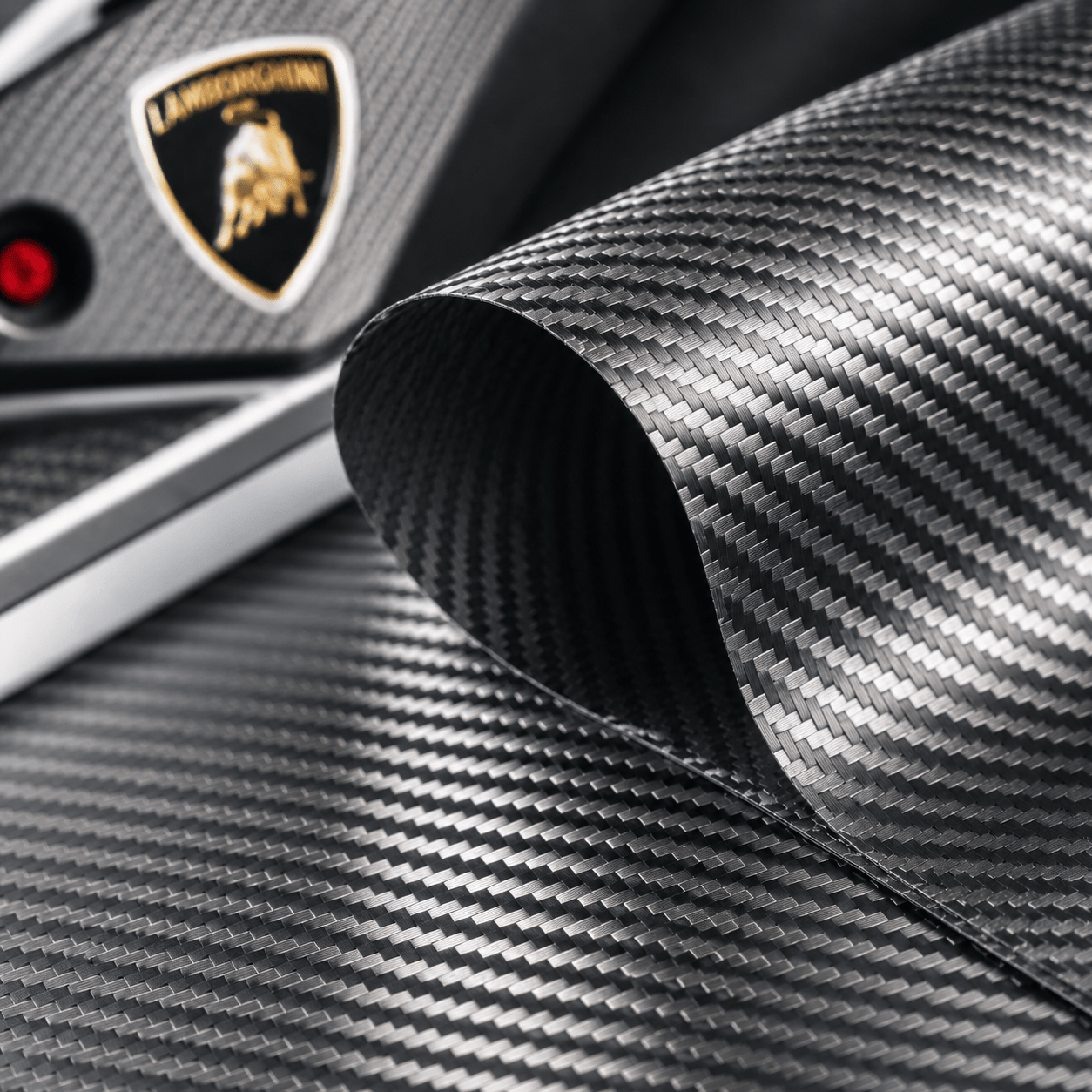
Unlike metals, carbon fiber offers an extraordinary balance between lightness and strength, allowing designers and engineers to reduce weight while maintaining exceptional structural integrity.
This unique combination has made carbon fiber indispensable wherever performance, precision and durability are essential.
How Carbon Fiber Is Manufactured
Stabilization
The fibers are heated to approximately 200–300°C while exposed to oxygen, preparing their molecular structure for the next phase.
Carbonization
Temperatures exceeding 1,000°C eliminate all non-carbon elements, leaving behind an exceptionally pure carbon structure with remarkable mechanical properties.
Surface Treatment
The fibers receive specialized treatments that improve adhesion with epoxy resins, ensuring optimal structural performance.
Weaving
Thousands of individual filaments are woven into recognizable patterns such as plain weave, twill or satin, each offering distinct mechanical and aesthetic characteristics.
Composite Lamination
The woven carbon fabric is impregnated with high-performance resin before being carefully layered inside precision molds.
Curing
Many premium components are cured inside an autoclave, where heat and high pressure eliminate air pockets and produce an exceptionally strong, lightweight structure with flawless surface quality.
Why Carbon Fiber Is So Highly Valued
Carbon fiber is renowned for its exceptional strength-to-weight ratio, combining incredible rigidity with outstanding durability. Lightweight, corrosion-resistant and dimensionally stable, it has become the material of choice for Formula 1, luxury automotive engineering and high-end design. Beyond its technical performance, the distinctive woven finish has made carbon fiber an icon of innovation, craftsmanship and contemporary luxury
Carbon Fiber in High-Performance Automotive Engineering
Perhaps nowhere is carbon fiber more celebrated than in the automotive industry.
Modern Formula 1 cars rely almost entirely on carbon fiber monocoques capable of protecting drivers during impacts exceeding 300 km/h, while remaining extraordinarily lightweight.
The same philosophy extends to many of the world's most prestigious manufacturers.
Carbon fiber has become a defining element of performance models produced by brands including Ferrari, Lamborghini, McLaren, Porsche, Mercedes-AMG and Pagani. It appears throughout the vehicle, from structural chassis and aerodynamic components to interior trim and exposed body panels.
Beyond aesthetics, every carbon fiber component contributes to improved performance by reducing weight while increasing rigidity.
For enthusiasts, carbon fiber represents the perfect balance between engineering excellence and visual sophistication.
Carbon Fiber in Luxury Audio
In high-end audio, every material influences acoustic performance. Thanks to its exceptional rigidity and lightweight structure, carbon fiber helps reduce unwanted vibrations and resonance, improving sound precision and stability. Combined with its distinctive automotive-inspired aesthetic, it has become a defining material for luxury audio systems where engineering, performance and design come together.
How iXOOST Integrates Carbon Fiber into Automotive Audio Design
At iXOOST, carbon fiber is far more than a decorative material.
Inspired by the engineering philosophy of high-performance automotive design, the company integrates genuine carbon fiber into several of its iconic creations, where aesthetics and functionality coexist.
Every exposed carbon surface reflects the same values found in motorsport: precision, lightweight construction and meticulous craftsmanship.
Combined with authentic automotive components, advanced acoustic engineering and handcrafted Italian manufacturing, carbon fiber helps transform each iXOOST creation into a collectible design object that celebrates both sound and performance.
Rather than imitating automotive culture, iXOOST brings its engineering language directly into luxury interiors.